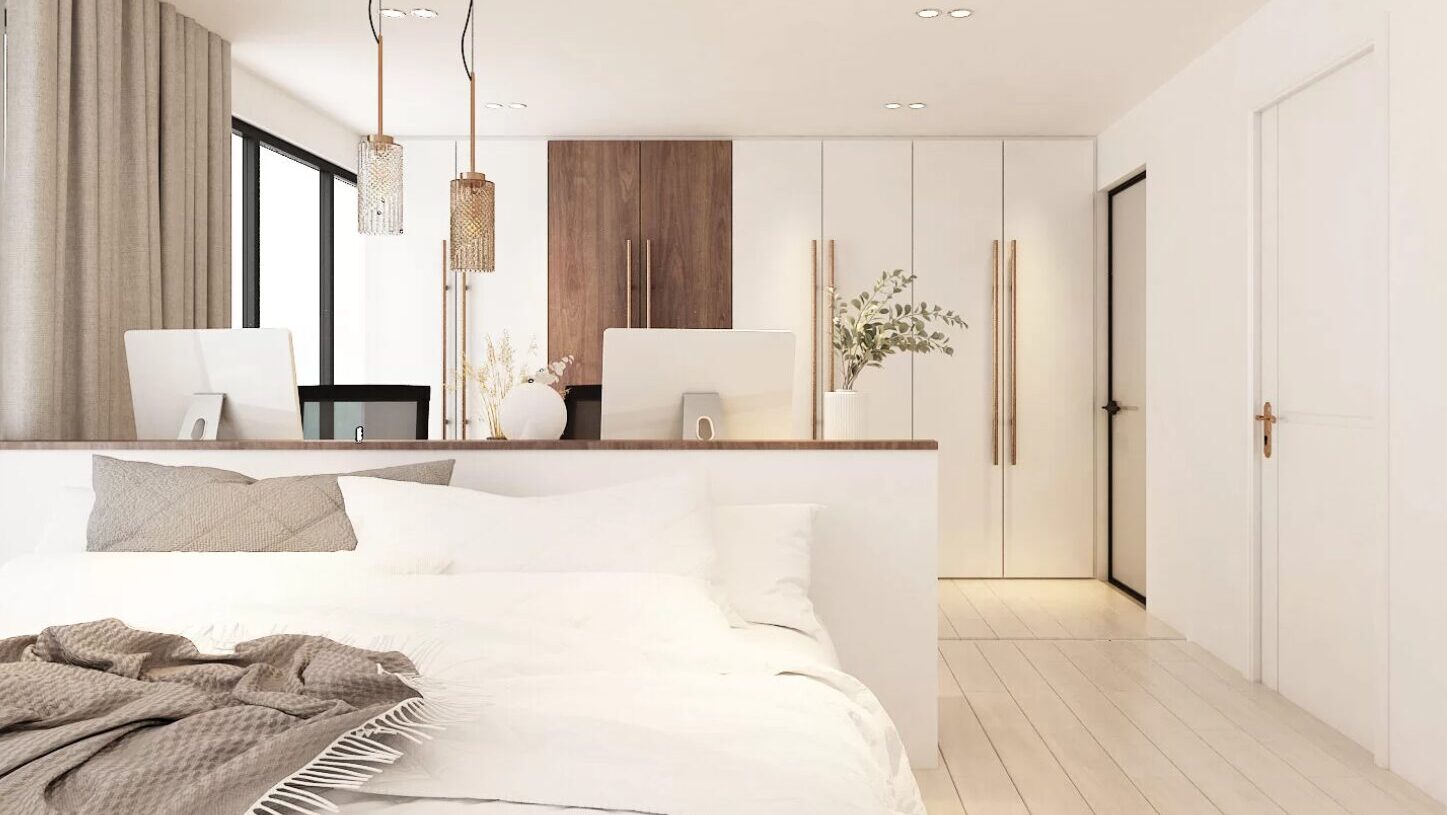
The bedroom is one of the few rooms in the home where the design should actively support slowing down. Colour plays an important role because it covers such a large visual area and affects how the room feels throughout the day.
Soft Neutrals
Soft neutrals can create a quiet base without making the bedroom feel cold.
Warm whites, beige, taupe, and gentle greys can work well when paired with suitable lighting and natural textures.
Muted Greens
Muted green tones can bring a subtle connection to nature without becoming overly bright.
Softer shades can work particularly well when paired with timber, linen, or other natural looking materials.
Gentle Blues
Blue is often associated with calmness, and softer blue tones can create a restful backdrop.
Avoid overly saturated shades if the goal is a quieter bedroom. A muted tone can be easier to live with across different lighting conditions.
Earthy Tones
Earthy colours can add warmth and depth while maintaining a relaxed atmosphere.
Terracotta, clay, muted brown, and warm beige can be used through walls, textiles, furniture, or smaller accents.
Consider the Lighting
The same paint colour can look very different under daylight and artificial lighting.
Singapore bedrooms may receive strong natural light at certain times of day, so test samples in the actual room before committing.
Warm lighting can also soften the overall palette in the evening.
Keep the Overall Palette Cohesive
A calming bedroom does not require every surface to be the same colour.
Instead, choose a main tone and support it with a small number of complementary shades. Keeping the palette controlled can make the room feel more settled and less visually busy.
FAQ
What colours are best for a calming bedroom?
Soft neutrals, muted greens, gentle blues, and earthy tones can all create a calmer atmosphere. The right choice depends on the room's natural light and the overall material palette.
Should bedroom walls be dark or light?
Either can work. Lighter colours can help a small bedroom feel more open, while darker tones can create a more enveloping atmosphere. Lighting and room size should be considered together.
Should I test paint before renovating?
Yes. Test samples in the actual room and view them at different times of day because natural and artificial lighting can change how colours appear.