
You can spend weeks choosing the headboard and the wardrobe finish, then move in and still sleep badly. Light from the streetlight comes in above the curtain. You hear people talking outside your door. The aircon blows straight onto your face at 3am.
Good bedroom design for better sleep starts with three things: light, sound and air. They matter more than how the room looks, and most of them are decided during renovation, when your designer plans the false ceiling, the wiring and the carpentry. Once those are built, fixing a problem means hacking or living with it.
Your home decides which problem affects you most. A bedroom with big windows lets in a lot of city light. A bedroom near the main door picks up footsteps and voices. A bedroom facing a main road gets traffic noise. Paint colours won't fix any of these, so we've covered colours separately in our guide to calming bedroom colours.
Blackout Curtains: Close the Gaps Around the Window
Light at night slows down melatonin, the hormone that makes you sleepy. That's why the Sleep Foundation's first tip for a better bedroom is to make it as dark as possible.
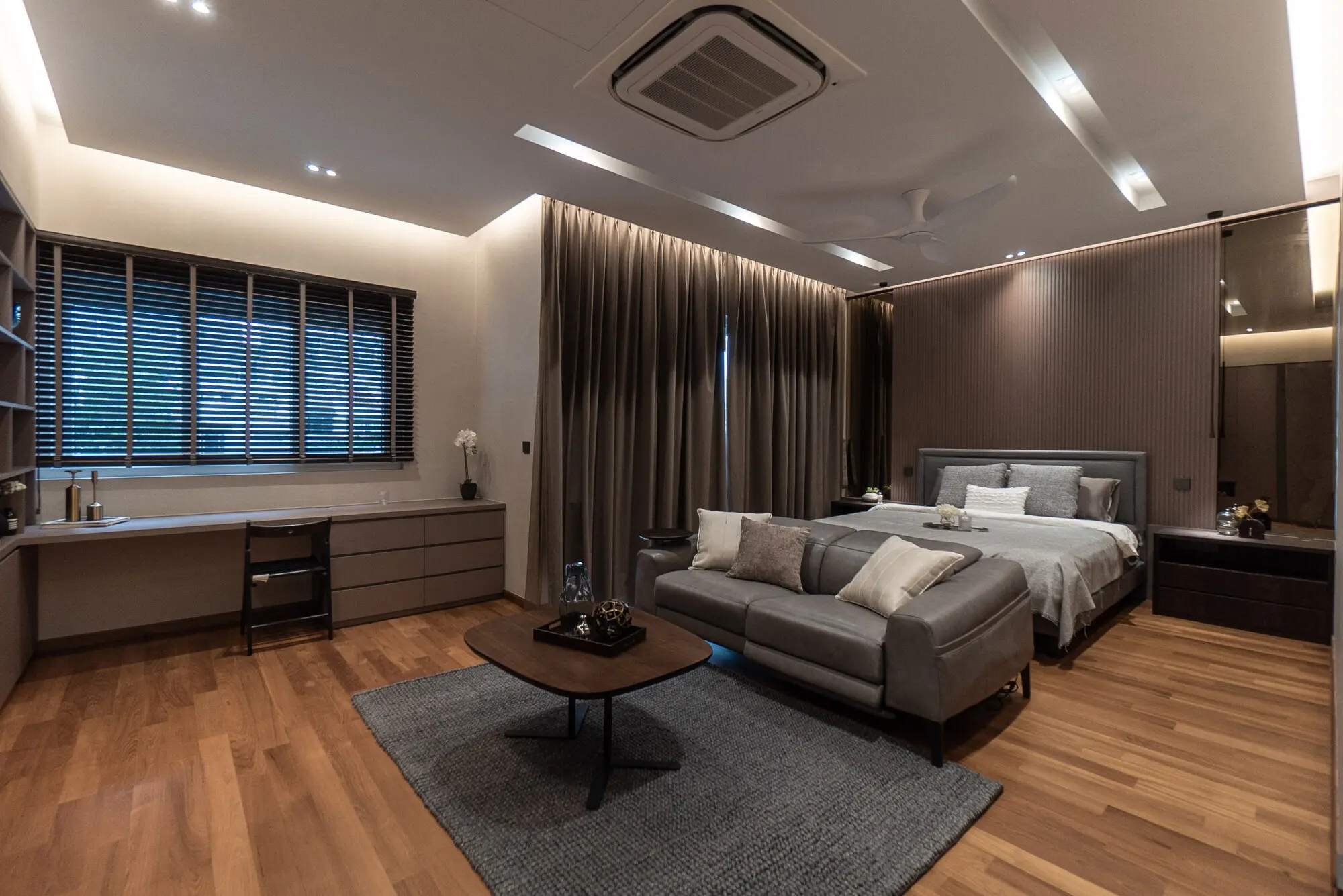
Even with blackout curtains, light can still get in through the gaps above and around the sides of the window. A short rod just above the window frame leaves a bright line at the top and down both sides. To close these gaps, ask your designer for a curtain box in the false ceiling so the curtain hangs from the ceiling. As a starting point, make the track about 15cm wider than the window frame on each side, and let the curtains reach the floor.
If you still want soft daylight in the afternoon, use two tracks, one for a sheer curtain and one for a blackout curtain. Tell your designer before the ceiling goes up, so the curtain box is deep enough for both. Adding a second track later is hard to do neatly.
Interior Design Firm: Dreamhome Culture
Bedroom Lighting That Helps You Relax Before Bed
The Sleep Foundation also suggests dimming the lights as bedtime gets closer. That's hard to do with one bright ceiling light that's either on or off.
Plan three kinds of light instead. A main ceiling light for cleaning and packing. Softer cove or bedside lights for the evening. A very low light near the floor, like an LED strip under the bed frame, so you can get up at night without switching everything on. Pick warm white for all of them.
Ask for two way switching on the main light too, with one switch at the door and one at the bed. You'll never have to walk across a dark room to turn it off. It's easy to add during wiring and messy to add after the walls are painted.
Interior Design Firm: Interior Artist
Where to Put Bedside Switches and Sockets
Decide early who sleeps on which side. Each side should get its own reading light and switch, so one person can read while the other sleeps.
Plan the socket positions around the height of your bedside tables, so you can plug in a charger without moving any furniture. A socket placed a little above the tabletop is easy to reach from the bed. For reference, BCA's Code on Accessibility sets a range of 450mm to 1200mm from floor level to the centreline of the outlet, where the code applies.
Keep the router and anything with a standby light out of view from your pillow. In a dark room, even a tiny light is easy to notice. We've covered planning sockets around everyday habits in 6 daily routines your home layout should plan for.
Interior Design Firm: Holm Interior
How to Make a Bedroom Quieter
The WHO recommends keeping the average noise level in bedrooms below 30 decibels at night for good quality sleep. You can't stop traffic or a neighbour's renovation, but you can control how much of it gets into the room.
It helps to know the difference between two things. Sound insulation stops noise from getting into the room. Sound absorption cuts down the echo inside the room. They need different fixes.
For insulation, start with the gaps. The gap under the door, a hollow door and old window seals let in much more sound than a solid wall. A solid core door with a seal at the bottom makes a clear difference, especially if the room is near the main door or the living room. For a room facing a main road or an MRT line, better sealed windows are the bigger fix. In Singapore, new windows must be installed by a BCA approved window contractor.
For absorption, add soft items. Heavy curtains, an upholstered headboard and a rug make a room with hard floors sound calmer, but they won't stop traffic noise from outside. If the noise comes from outside, spend on the door and windows first.
If you get to choose your bedroom, choose for quiet before size. The room furthest from the main door, the kitchen and the road is the better one to sleep in, even if it's a bit smaller. If you can, visit the home at night before you decide. A room that feels quiet on a Saturday afternoon can sound very different at 11pm.
Interior Design Firm: Miman Design
Bedroom Airflow, Ventilation and Aircon Placement
Don't place the aircon just because the trunking is easiest to run there. That's how a unit ends up blowing straight at the bed. Cold air on your face all night is hard to sleep through, so ask your designer to place the unit so the air flows along the room or towards the foot of the bed, not onto your pillow. Then plan the trunking around that spot.
If you want a ceiling fan as well, plan the point and the wiring before the false ceiling goes up, and keep it clear of wardrobe doors.
A cool bedroom is not always a well ventilated one. Most home aircon units cool the air that is already in the room without bringing in fresh air from outside. When the weather and noise outside allow, open the windows to air out the bedroom before bedtime, and ask your designer how fresh air can get into the room without letting in too much noise.
Interior Design Firm: MyDesign Interiors
Bedroom Renovation Checklist
Bring these points to your interior designer before renovation begins:
Check where outside light comes into the bedroom.
Leave enough space in the curtain box for a blackout and a sheer curtain track.
Plan separate lighting for daytime, evening and night time use.
Place switches and sockets around the bed and bedside furniture.
Find the main noise sources before choosing doors and windows.
Position the aircon so it doesn't blow straight onto the pillow.
Plan for fresh air as well as cooling.
Plan the Bedroom Around Your Nights
The bedroom you sleep best in isn't always the best looking one. Good bedroom design for better sleep comes from planning the room around your nights. Before you meet a designer, think through a normal night. What time does each person sleep and wake up? Which window gets light from a streetlight or the next block? Where do the phones charge? Who gets up in the middle of the night?
These answers tell your designer where the curtain box, switches, sockets and aircon should go, and how fresh air gets into the room. When you're ready, take our quick quiz to get matched with an interior designer who suits your style and the way you live.

