The quotation has just come back. You've spent three Saturdays visiting showrooms, collected four different ID proposals, and now you're sitting at the dining table with a spreadsheet that somehow adds up to $85,000 for a 4-room HDB flat you were told would cost $60,000. Something has to give. The question most homeowners get badly wrong is what.
Most first-time renovators approach this moment emotionally. They cut what feels cuttable: the less glamorous items, the things no one will photograph. They protect what is visible. And that instinct, almost every time, produces a home that photographs well on handover day and quietly disappoints them for the next five years.
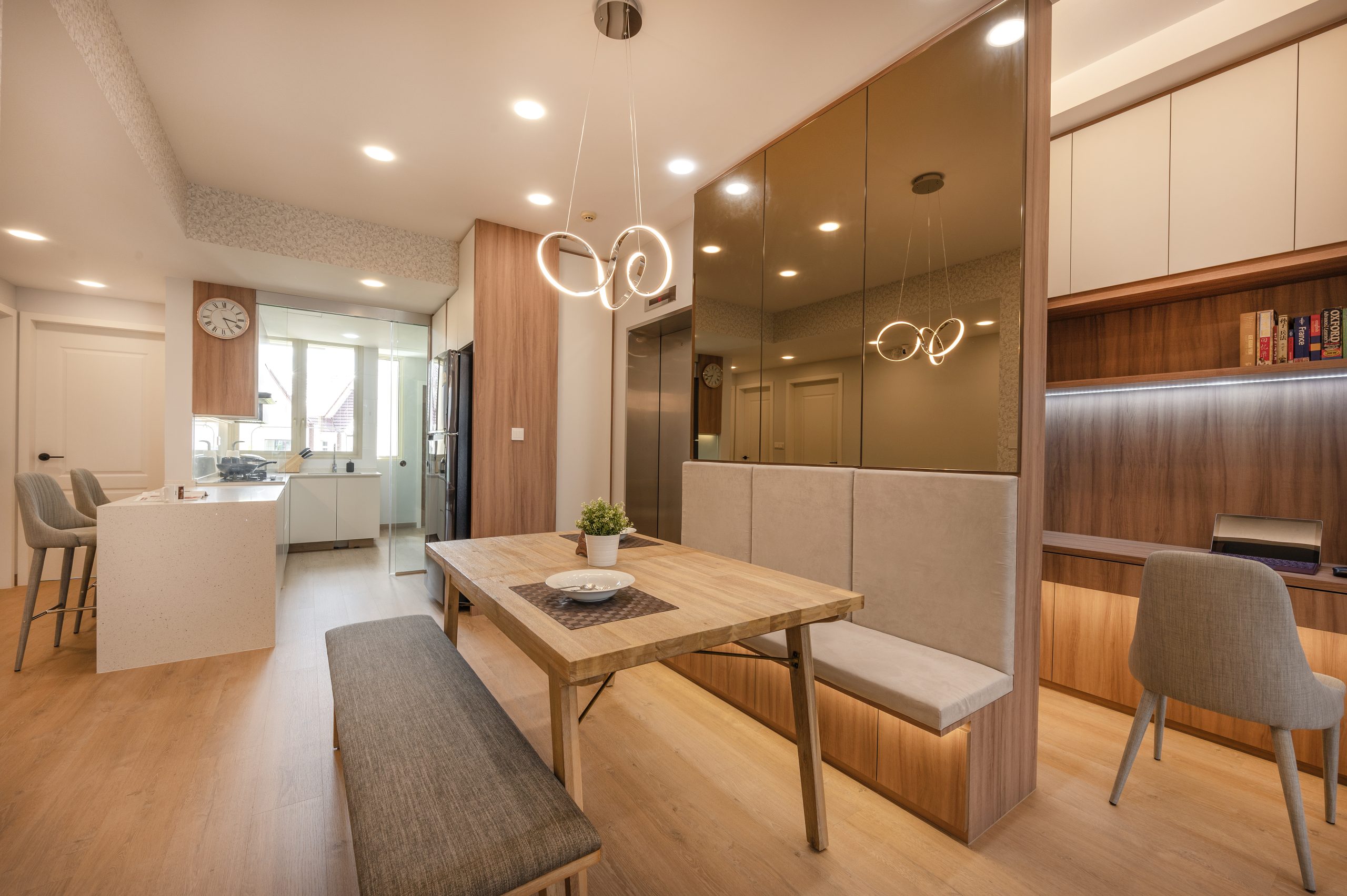
 Interior Design Firm: 36 Interior
What You're Actually Paying For When You Spend More
Tip: Before you decide where to cut, understand what premium spending actually buys because it is rarely the material itself.
A homeowner renovating a resale 5-room flat in Bishan recently upgraded from laminate to solid timber flooring throughout, shaving $4,000 from her carpentry budget to fund it. The floor looked beautiful in week one. By month eight, two planks had begun to gap and one section near the kitchen had lifted slightly from humidity exposure. Singapore's relative humidity sits between 70% and 90% for most of the year. Solid timber however premium is not engineered for that. The laminate she dropped would have held.
What premium spending actually buys is performance over time: materials that age predictably, hardware that doesn't corrode, joinery that remains flush after the aircon runs for two years and the walls have expanded and contracted through a hundred humid afternoons. It buys thickness in places you never see carcass boards behind cabinet doors, proper waterproofing depth in the wet kitchen, cable management that a future electrician won't curse. These are not exciting line items. They are the difference between a home at year three that feels maintained and one that is quietly unravelling.
If you're renovating a 5-room flat and want a realistic sense of where the money goes, 5-room HDB renovation cost in Singapore: the ultimate 2025 budget guide is a useful starting point before you decide what to protect and what to cut.
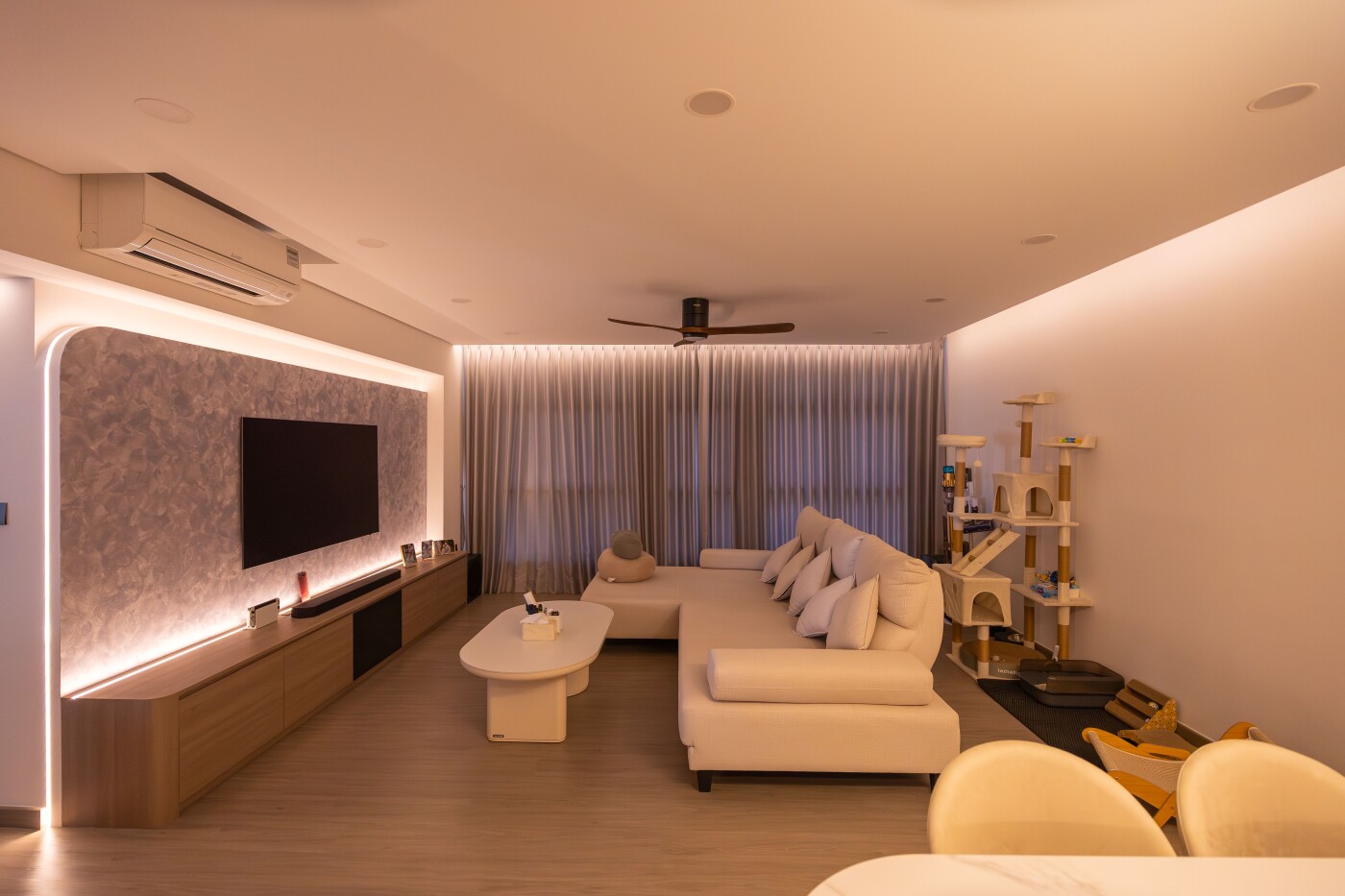
 Interior Design Firm: Mikaboo Interior
The Feature Wall Problem
Tip: Spend on the surfaces and fixtures you interact with daily. Simplify anything that exists primarily to be looked at.
Walk into almost any recently renovated BTO in Singapore and you will find a feature wall. Sometimes it is fluted timber-look panels. Sometimes it is a limewash effect or textured paint in a deep earth tone. It is almost always the first thing the homeowner points out. It is also, almost always, the first thing that will age.
Feature walls derive their appeal from contrast; they work because the surrounding walls are plain. But tastes shift, Instagram cycles through aesthetics every 18 months, and what reads as grounded and earthy today will read as dated in four years the way chevron-pattern tiles read now. The budget spent on a statement feature wall is a budget that could have gone into better tap fittings in the bathroom, a higher-quality kitchen countertop, or simply a better quality of paint across all four walls, the kind that wipes clean without streaking and holds colour without chalking in the humidity.
This is not an argument against having a considered aesthetic. It is an argument against spending money on decoration when you haven't yet finished spending money on infrastructure. For a closer look at how fluted glass and panel detailing actually hold up as design choices, latest home interior trend: fluted glass ideas for a stylish home is worth reading before you commit.
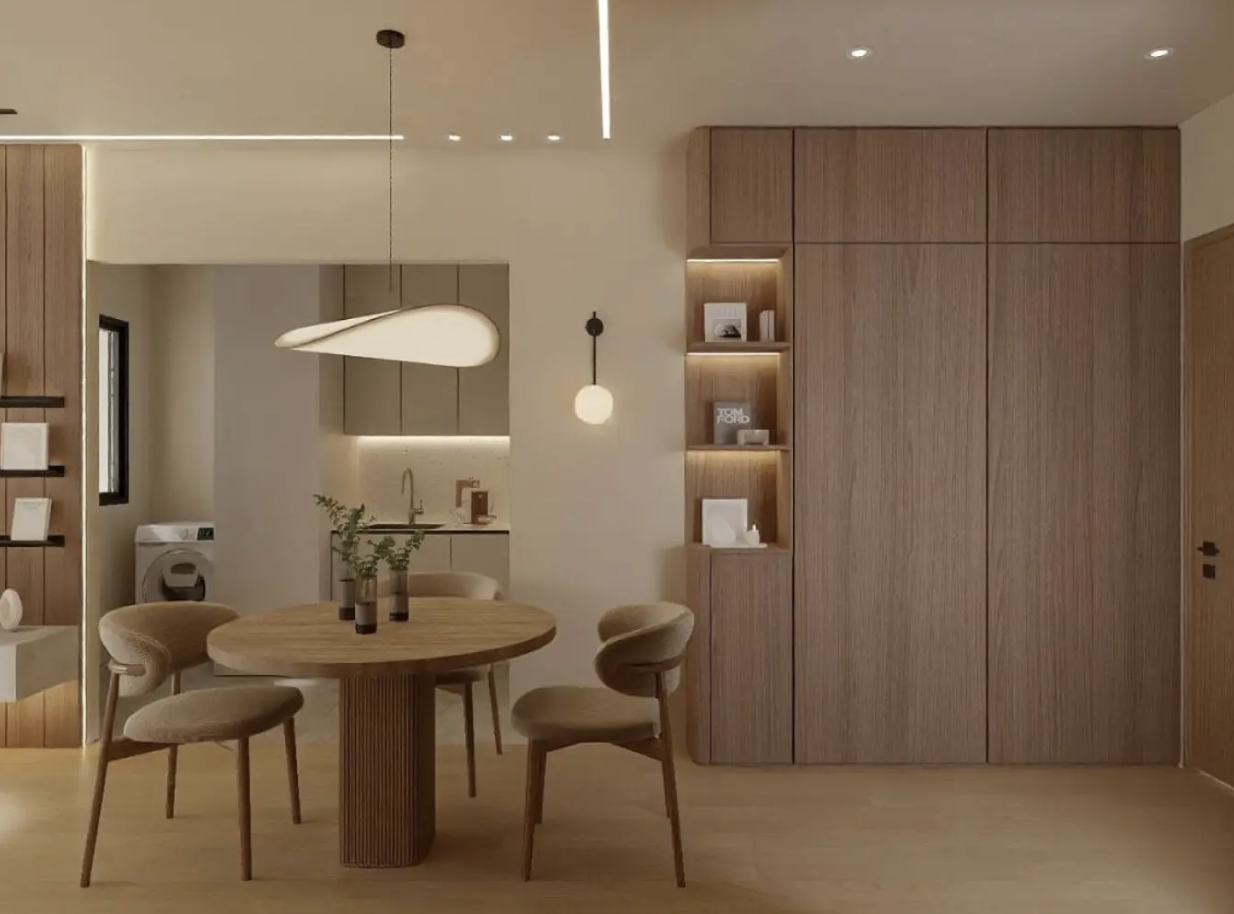
 Interior Design Firm: Mercurial Interior Design
Where The Budget Should Actually Hold
Tip: Protect four categories without compromise plumbing, waterproofing, electrical load planning, and storage joinery. These are the invisible architecture of daily life.
A couple renovating their first condo in Clementi made a decision that seemed sensible at the time: they kept the existing plumbing layout to save on hacking costs, rerouting only what was necessary for their new wet-dry kitchen separation. Eighteen months later, water pressure to the master bathroom shower was inconsistent, tracing back to a partial blockage in an older pipe section that hadn't been replaced. The cost of opening the wall, rectifying, and re-tiling was more than the original hacking quote.
Singapore resale flats and older condos carry plumbing and electrical infrastructure that is often 20 or 30 years old. Waterproofing membranes in bathrooms have a service life. Electrical distribution boards in older units were not designed for the load that a modern household with induction hobs, multiple aircon units, a washer-dryer combo, and a full suite of kitchen appliances actually draws. These are not areas to simplify. They are areas where the cost of getting it wrong compounds over time in ways that are deeply disruptive to live through.
Storage joinery sits in the same category for a different reason. The amount of storage you build is the single most predictable determinant of how calm or chaotic your home feels to live in three years from now. Not the colours. Not the materials. The storage. Homeowners renovating resale flats in particular should read through resale home renovations: the dos and don'ts you need to know about before you begin reno works before finalising their scope of works.
 Interior Design Firm: Mujian Home Atelier
What You Can Safely Simplify
Tip: Decorative lighting, soft furnishings, and surface accessories are the categories where restraint saves money now and gives you flexibility later.
There is a recurring pattern in renovation budgets: homeowners overspend on pendant lights. Not the electrical work, the fittings themselves. It is easy to understand why. Lighting showrooms are designed to be atmospheric. The pendants look transformative in-store. Back in a 90 sqm flat with a ceiling height of 2.6 metres and afternoon sun hammering through a west-facing living room window, the effect is more modest.
Pendant lights, surface-mounted fixtures, and decorative fittings are among the easiest things to replace or upgrade later as taste and budget allow. The cabling and points are what cost money to move. Commission good cabling work and sensible switch placement. Then buy simple, mid-range fittings now and revisit in three years when you have a better sense of how you actually live in the space and when you have more budget to allocate.
The same principle applies to curtains, rugs, cushion covers, and most of what fills the space after renovation. These are items that follow function and feeling rather than define them. A room with excellent proportions, good light management, and well-built joinery will absorb simple soft furnishings without looking bare. A room that is skimped on storage and layout will not be saved by expensive drapes. For a grounded take on what lighting upgrades are actually worth pursuing on a budget, achieving luxe lighting on a budget for your home covers the essentials without overselling.
 Interior Design Firm: Explore Living
The Showroom Trap and the Instagram Lag
Tip: Do not use a showroom or a social media reference as your renovation brief. Use the way you actually live as your brief.
Showrooms are staged for maximum visual impact in a controlled environment. Instagram references are photographed at their best, often with temporary styling that leaves the moment the photographer does. Neither is a reliable guide to how a design decision will feel at 7am on a Tuesday when you're trying to find your keys.
The most common victim of this gap is the open-concept kitchen. It photographs beautifully. It also means that every cooking session and in a Singapore household that means oil, steam, and wok hei on a reasonable weeknight circulates through the living and dining area. Homeowners who cook regularly and choose an open kitchen for aesthetic reasons often find themselves missing their wet kitchen or spending $2,000-$3,000 on a ventilation system that wasn't in the original quote. The wall cost less to hack than the ventilation cost to add.
A renovation brief built around how you actually move through your mornings, how often you host, whether you work from home, how your household manages laundry and groceries that brief will produce a home that functions. A brief built around a hotel lobby photograph will produce something that functions like a hotel lobby. Impressive to enter. Awkward to live in. The practical case for and against open layouts is laid out clearly in open versus closed kitchen: how to make the right design choice?, which is worth reading before that conversation with your ID.
 Interior Design Firm: Cozy Ideas
Making Peace with the Version You Can Afford
Tip: A renovation done in phases, with intention, is better than one done all at once with compromises that frustrate you for years.
There is no version of this where everything is done perfectly, all at once, within budget. That home does not exist. What does exist is the option to be deliberate: to spend where performance and function are non-negotiable, to simplify where aesthetics can be revisited, and to leave certain decisions for a second phase rather than making them badly now.
Homeowners renovating their second property almost always arrive with a shorter wishlist. Not because they want less because the first renovation taught them, at some cost, what actually mattered. They have already learned, at some cost, that the wet kitchen matters more than the island countertop. That the wardrobe interior matters more than the wardrobe door finish. That the aircon layout matters more than the light fitting above the dining table.
The first renovation is often where this is learned. It doesn't have to be home renovation money-saving tips every savvy Singaporean homeowner should know is a useful reference for homeowners trying to stretch a budget without making cuts that cost more later.
 Interior Design Firm: Kaie Projects
A home with genuine, lasting value is not defined by how many premium finishes appear in the renovation invoice. It is defined by the daily ease of living in, where the storage is sufficient, the infrastructure holds, and nothing demands urgent attention at year four. That quiet, functional comfort is harder to photograph than a feature wall. It is also far harder to replicate once it has been traded away for something that only looks impressive.
When you are ready to work with a designer who understands how Singapore homes age and how to make the right decisions early, take our quick quiz and we'll match you with someone who does.
FAQ
1. Should I always choose engineered materials over natural ones in Singapore's climate?
Not always but you should factor in humidity performance when comparing options. Engineered timber, for instance, handles Singapore's humidity considerably better than solid timber. Natural stone can be beautiful but requires sealing and maintenance that some households won't sustain. The question isn't natural versus engineered, it's whether the material's maintenance requirements match how your household actually lives.
2. My ID is recommending a full open-concept kitchen. Is this always a bad idea?
Not if you understand the trade-offs. Open-concept kitchens work well for households that cook lightly or primarily use electric appliances. If you cook with a wok regularly, or if smells and noise are a concern for anyone working from home, a partial separation, a glass partition, a peninsular counter often delivers the visual openness with better practical containment. Ask yourself honestly how you cook before you hack a wall.
3. How do I know which joinery quotes are cutting corners versus fairly priced?
Compare carcass specifications, not just door finishes. A lower quote sometimes means thinner carcass boards, cheaper runners, or shorter warranty terms on hinges and mechanisms. Ask specifically: what thickness are the carcass boards? What brand are the runners and hinges? Are soft-close mechanisms included? The door fronts are what you see. The carcass is what you live with.
4. Is phasing a renovation actually realistic, or does it mean doing everything twice?
Some things genuinely cannot be phased hacking, waterproofing, electrical work, and plumbing should all happen together to avoid opening walls twice. But surface finishes, lighting fittings, furnishings, and some carpentry can be added later without major disruption. Plan your first phase around infrastructure and function. Give yourself permission to leave the rest.
5. What's the most common item homeowners wish they had spent more on?
Storage almost universally. Specifically, built-in storage that uses full ceiling height. In Singapore HDB flats where usable floor area is constrained, vertical storage space is often the most underleveraged asset in the home. The homeowners who got this right in phase one rarely wish they had spent more on their feature wall instead.