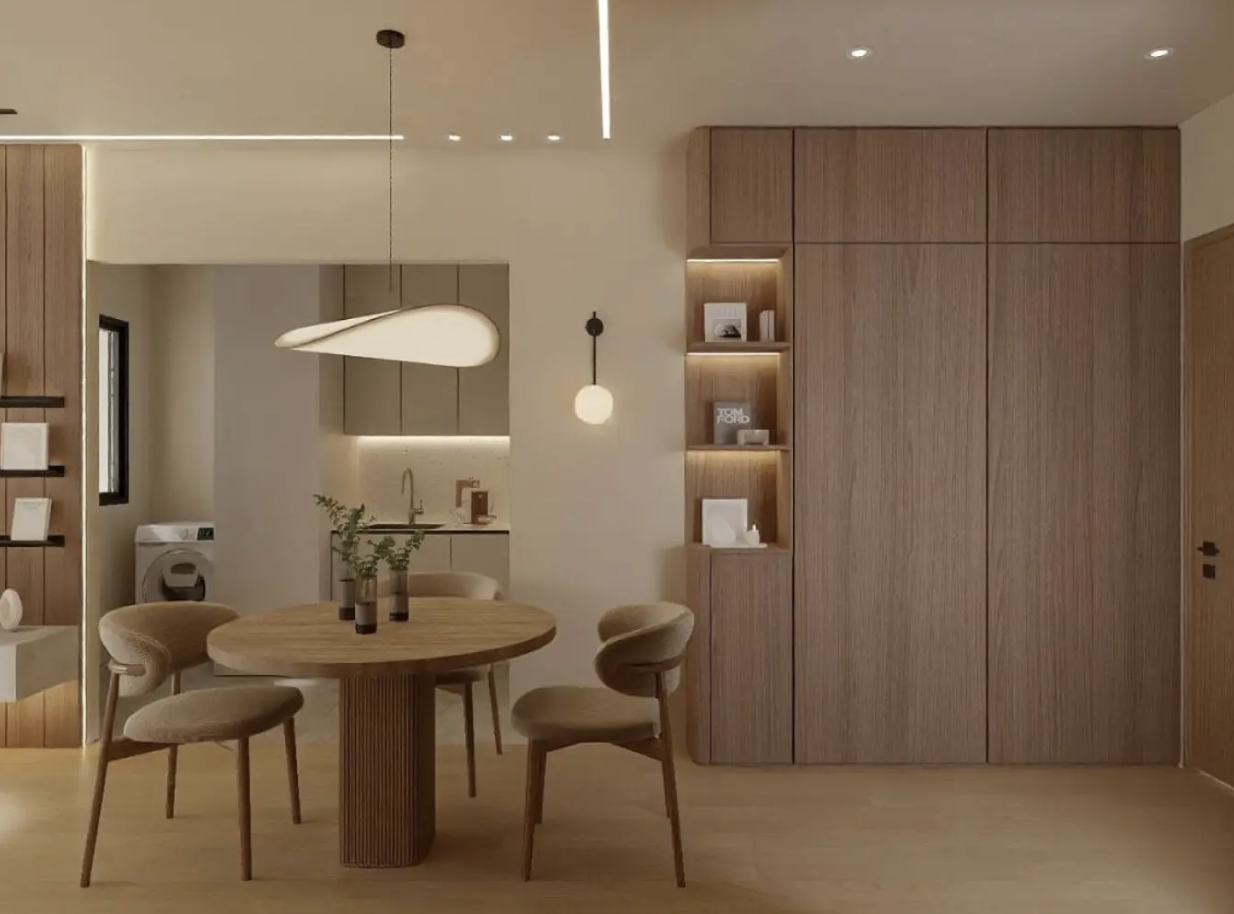
If you've just collected the keys to a new condo, you've probably already heard the numbers. Thirty thousand. Fifty thousand. A hundred and fifty thousand. What nobody tells you is what those numbers actually get you once the quotes start coming in.
That gap between hearing a budget figure and understanding its real scope is where most homeowners get stuck. A number on its own doesn't tell you whether you can redo the kitchen, whether the bathrooms are included, or whether you'll need to leave half the unit untouched. This guide walks through what each of these three budgets typically covers for a relatively new condo, using three real Redbrick Homes projects as reference points along the way.
Before the Budget: What Condition Is Your Condo In?
Two homeowners can have the exact same budget and end up with completely different renovations, and the biggest reason is usually the starting condition of the unit, not taste.
A new launch condo typically comes with many of the basics already installed, such as flooring, kitchen cabinetry, wardrobes, bathroom fittings, and electrical provisions, depending on the development and its specification. Because there's usually less to hack or replace, more of the renovation budget can go toward customisation: carpentry, lighting, feature walls, and finishing touches.
A resale condo, especially an older one, usually needs to account for hacking, rewiring, replumbing, or replacing worn fittings before any styling decisions happen. Industry cost guides commonly put hacking, plumbing, and electrical work at roughly 30 to 40 percent of a resale renovation budget before a single design choice gets made.
The budgets below assume a relatively new condo where major hacking isn't required. If your unit is an older resale, expect the same figures to buy noticeably less, since more of the budget goes toward getting the unit ready before the design work even begins.
$30,000: The Selective Renovation
At this level, most homeowners will need to prioritise rather than renovate every room to the same extent. Carpentry is usually the biggest single expense in any renovation, and industry pricing guides put a single run of custom cabinetry or wardrobes anywhere from $8,000 to $25,000 depending on size and material. With a $30,000 budget, that typically means choosing where the money goes carefully rather than spreading it evenly across the whole unit. Current guides show new condo renovation budgets can vary quite widely depending on unit size and scope, so this is best read as a planning range rather than a fixed ceiling.
What you can cover:
● One to two priority areas, tackled properly rather than a little bit of everything
● Selected carpentry, such as a feature wall unit or a set of wardrobes
● A considered lighting feature or two, since lighting design is comparatively affordable with an outsized visual impact
● Cosmetic upgrades: paint, hardware, small fixture swaps
What you probably have to compromise on:
● A full kitchen or bathroom remodel is likely to consume a large share of the budget, leaving less room for other areas
● Full-home carpentry across every room
● Extensive flooring replacement throughout the unit
● Major structural or layout changes

Interior Design Firm: Empyrean Design Studio
Reported budget: approx. S$30,000
At Ki Residences At Brookvale, Empyrean Design Studio worked within this exact tier. Rather than spreading the budget evenly, the living area was kept open, storage was planned around what the household actually uses day to day, and a single lighting feature became the visual anchor of the space. It's a useful illustration of how a $30,000 renovation tends to work: the budget concentrated on the areas that mattered most, while other parts of the unit stayed closer to how the developer handed it over.
The main trade-off at this level is coverage. Most homeowners will end up prioritising a handful of areas rather than giving every room the same treatment, and decisions about the kitchen or bathrooms often have the biggest effect on how far the budget stretches.
$50,000: More Rooms, More Customisation
Fifty thousand dollars roughly doubles what's realistic to change, and it usually shows up in two ways: more square footage of carpentry, and the ability to address a second priority area, most commonly the kitchen.
Kitchens are one of the more complex spaces to renovate because the work combines carpentry, tiling, and plumbing. Cost guides suggest a meaningful kitchen upgrade, new counters, additional cabinetry, updated fittings, without a full layout change, can run from roughly $14,000 upward depending on finishes. At $50,000, that kind of kitchen work becomes realistic alongside carpentry and lighting in the living area, though other rooms, especially bedrooms, usually still stay comparatively simple.
What you can cover:
● Kitchen and living area together, rather than choosing just one of the two
● More carpentry, typically extending across two to three zones
● More layered lighting design across the main living areas
● Selected bathroom upgrades, such as new fittings or a vanity
What you probably have to compromise on:
● Full luxury finishes throughout the entire home
● The same level of work across every single room, including all bedrooms
● A complete remodel of more than one bathroom

Interior Design Firm: Wild Design
Reported budget: approx. S$50,000
At Parc Clematis, Wild Design used this tier to prioritise the kitchen and living flow, the spaces the household uses every day, while keeping the bedrooms comparatively simple. That's a common pattern at this level: rather than spreading the budget evenly, homeowners tend to pick one or two zones to bring fully up to standard, and let the rest of the home stay functional but understated.
The real shift from $30,000 to $50,000 isn't just more money for the same scope. It's the ability to address a second meaningful zone of the home, most often the kitchen, without giving up the living area work that a lighter budget already covers.
$150,000: A Much More Comprehensive Renovation
At $150,000, the renovation usually stops being about one or two priority zones and starts covering most or all of the home.
At this level, there is enough budget to address most or all of the home, with more extensive carpentry, kitchen and bathroom work, lighting, flooring, and higher-spec finishes throughout, rather than concentrating spend on one or two spaces.
What you can cover:
● Whole-home carpentry, not just a priority zone or two
● A full kitchen remodel
● Full bathroom remodels, potentially more than one
● A complete lighting design across the whole unit
● Premium flooring and higher-spec materials such as engineered stone, solid surfacing, or feature veneers
● Room for a genuine bespoke feature without it competing against the rest of the renovation for funds
What changes:
You're no longer choosing just one or two areas. There's enough budget for the whole unit to feel cohesive, rather than a few standout rooms surrounded by untouched space.

Interior Design Firm: 36 Interior
Home type: Condo, Pandan Valley, Camelia Terrace
Reported budget: approx. S$150,000
At Pandan Valley, 36 Interior's project included a custom wine and display wall as one of the standout features of the home. It's worth being precise about what that feature actually represents. It's an example of the kind of bespoke, higher-cost element that becomes affordable once the rest of the home's carpentry, kitchen, and finishes are already funded, not the reason the budget needed to be $150,000 in the first place. The bigger shift at this tier is that nearly the whole home gets the same level of attention that a $30,000 or $50,000 budget can only give to one or two rooms.
Practically, this is the tier where a renovation starts to mean the whole unit rather than a set of upgrades, and where premium material choices become realistic without forcing cuts elsewhere.
The Real Difference Between $30K, $50K, and $150K
Lined up side by side, the progression across these three budgets isn't really about better taste or bigger ambition. It's about how much of the home the budget can reach, and how much room there is for higher-spec choices once the essentials are covered.
Category | $30,000 | $50,000 | $150,000 |
Spaces typically addressed | One to two priority areas | Two to three zones | Most or all of the home |
Carpentry | Selected, in priority areas | Two to three zones | Custom carpentry throughout |
Kitchen | Limited, unless made the priority | A meaningful upgrade | Full remodel |
Bathrooms | Usually minimal, unless prioritised | Partial refresh possible | Full remodel of one or more |
Lighting | One feature moment | Layered in main areas | Full design throughout the unit |
Materials and finishes | Budget to mid-range | Mid-range, some upgrades | Higher-spec, more premium options |
Typical scope | Selective refresh | Elevated priority zones | Whole-home transformation |
These are general guides based on typical Singapore condo renovation costs for a relatively new unit, not a guarantee. Your actual scope will depend on your unit's size, condition, and the finishes you choose.
How to Decide Your Starting Budget
Rather than starting with a number, it can help to start with a short list of questions:
● What condition is your unit in? A new launch with developer fittings already in place will stretch further than a resale unit needing hacking and rectification.
● How many rooms do you actually want to touch? Every additional room usually means additional carpentry, and carpentry is typically the single biggest cost in any renovation.
● Are the kitchen and bathrooms part of the plan? These are two of the more expensive areas to renovate because they combine carpentry, tiling, and plumbing.
● Are you keeping or replacing the existing flooring and fittings? Retaining what's already there is one of the more effective ways to free up budget for the areas you care about.
● How much customisation do you want? Fully bespoke carpentry and feature walls cost more than modular or semi-custom options.
● Are you choosing standard or premium materials? The gap between laminate and engineered stone, or between standard tiles and large-format porcelain, can meaningfully shift your total.
Answering these honestly before speaking with a designer makes it much easier to land on a budget that matches what you actually want to change, rather than working backward from a number you heard secondhand.
FAQ
Is $30,000 enough for a condo renovation?
It's enough for a selective renovation, where you prioritise one or two areas rather than treating every room the same way. It tends to work best for relatively new units where you can keep more of the developer's existing finishes and put the budget toward the spaces that matter most to you.
Do I even need to renovate a brand new condo?
Not necessarily. Many new launch units are move-in ready as handed over. A renovation at this stage is usually about customisation and personal taste rather than fixing something that doesn't work.
My condo is resale, not new. How much more should I budget?
Expect the same scope to cost meaningfully more, since hacking, rewiring, and fixture replacement often need to happen before any design work begins. Industry guides commonly put this additional cost at 15 to 40 percent above what the same scope would cost in a new unit, depending on the unit's age and condition.
What usually takes up the biggest share of a renovation budget?
Carpentry. Across most Singapore renovations, carpentry and masonry together typically account for 40 to 60 percent of the total budget, which is why the number of rooms getting built-ins has such a big effect on the final cost.
Should I renovate everything at once, or in phases?
Both are common. Renovating in phases, tackling the living area and kitchen first, for example, lets you spread the cost and adjust as you go, while a single comprehensive renovation avoids repeated disruption but requires a larger upfront budget.
How do I get an accurate number for my own unit?
Take our quick matching quiz and we'll connect you with ID partners who can scope a realistic budget based on your unit's actual condition and the rooms you want to prioritise.